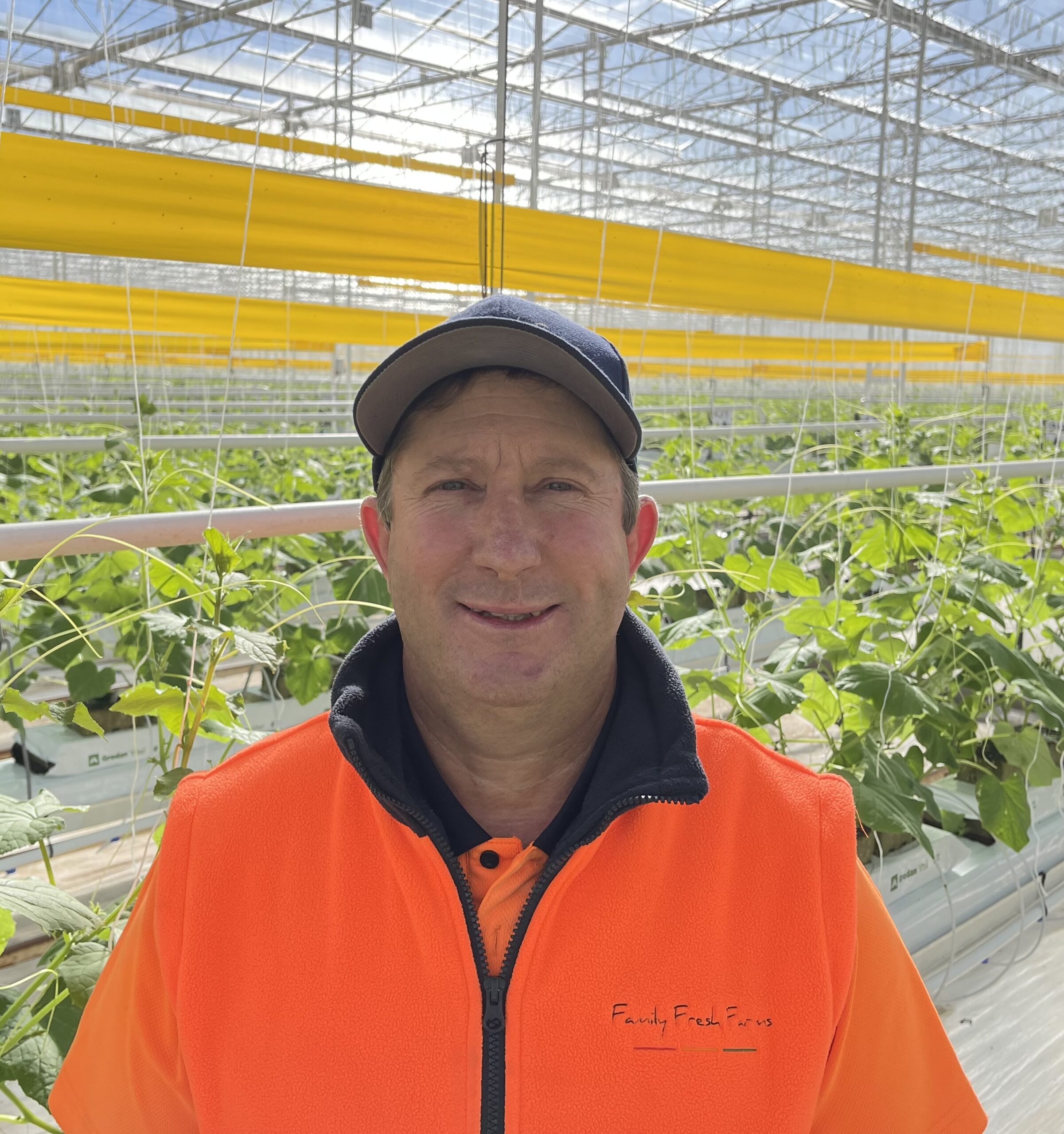
The 2022 growing season saw Addy Breugem, head grower at Thanet Earth Tomatoes, invest in a second climate screen to help the crops adapt to their new LED lighting regime. Working with both LEDs and a second climate screen is a new way of growing for Breugem but, happily, the insights he gained during Plant Empowerment’s 2022 Summer School reassured him that he had made the right decision. Curious about his story? Read everything about it below.
User Story
Thanet Earth Tomatoes follows the Plant Empowerment Principles to be able to grow sustainably
Addy Breugem, head grower at Thanet Earth Tomatoes, which is part of Thanet Earth – the biggest greenhouse in the United Kingdom – was one of the participants in the masterclass. Breugem has been working there since the Kent-based site first became a fresh produce powerhouse in 2009. He grew up on his father’s tomato nursery, where he farmed tomatoes until 2000. Today, he oversees the production of 400 million tomatoes a year.
Growers from all over the world learn about Plant Empowerment
This June, a small international group of dynamic growers of high-wire crops met at the GreenTech trade fair in Amsterdam, the Netherlands, to take part in the Plant Empowerment Summer School. The growers came from various countries including Greece, Mexico, and Georgia.
During this five-day masterclass, in which participants can attend only on invitation, the group attended several in-depth lectures by the Plant Empowerment implementation partners, drew inspiration from the displays and stands at the GreenTech and Floriade trade shows, and visited several pioneering growers. During the Summer School the international group of growers was prepared to achieve optimum results using minimum resources. After their action-packed days, they swapped notes whilst seeing some of the sights of Amsterdam and its surrounding areas.
A broader view on how to grow
Whilst invaluable knowledge is passed down from generation to generation, experienced growers like Breugem are aware that technological advances are continually being introduced to commercial horticulture production. “It’s always good to learn new things. The way we grow has changed quite a lot over the years.”
“With that in mind, I would definitely recommend the Summer School to other growers. The training course did give me a broader view on how to grow. It is also good to get in touch with growers around the world to discuss growing principles and not just stay in your own circle.”
The future of growing
Breugem heard about the masterclass through Plant Empowerment implementation partner Hortilux Schréder, which supplied Thanet Earth tomatoes with some of the 24 hectares of LED lights that were installed there in 2021.
One of the Summer School trips away from the classroom included a visit to the innovative vine tomato producer Schenkeveld Schiphol in Rijsenhout. The complex boasts four state-of-the-art greenhouses, with the most recent structure completed in June 2022. Equipped with the latest technologies – including a second climate screen – to provide optimal growing conditions for the crop, the facility was an inspiration to Breugem.
Discisions were confirmed
“By the time I took part in the Plant Empowerment Summer School in June [2022], the decision to invest in a second climate screen was already made. But taking part in the five-day masterclass gave me confirmation that investing in a second climate screen was the right decision,” reveals Breugem.
Breugem’s decision to invest in a second climate screen followed the installation, in 2021, of the energy-saving LED lights that replaced half of the original SON-T HPS [high-pressure sodium] lights in each of Thanet Earth’s three tomato greenhouses.
He recalls: “We had the choice to either renovate the SON-T lights or go for something new. We decided to install LEDs because, although the technology is not crystallized that much, in my eyes it’s the future. To grow sustainably we have to save energy – we cannot go on as we always have. With SON-T lights, our energy input was huge.”
A different way of growing
However, once the LEDs were in place, Addy and his colleagues observed that some of the fruits were weak and splitting. Furthermore, the leaves were deficient in nutrients, including calcium and boron. “After we’d invested in LED lights I could see that it was a different way of growing. The plants reacted differently. I’d expected something slightly more.”
Because LEDs emit less heat radiation than HPS lights, the plants were losing heat towards the cold glasshouse roof when the black-out screens were opened in the morning. The crop then became colder than the air temperature, which meant that it was unable to evaporate. This created condensation on the plants’ parts – rendering them unable to properly absorb nutrients and leaving them susceptible to plant diseases.
Two is better than one
On referring to Plant Empowerment, The Basic Principles (what he fondly describes as the Plant Empowerment ”bible”), Breugem determined that the best way to better utilise the glasshouses’ existing heat was to install a second climate screen. “To convince our shareholders of the usefulness of a second screen, I was able to make grateful use of the Plant Empowerment Bible”
During the autumn of 2022, Plant Empowerment implementation partner Svensson’s LUXOUS 1147 climate screens (which cleverly feature a clear cloth to allow for maximim light transmission) were installed in two blocks (totalling 14 hectares). A third block is due to have it’s LUXOUS 1147 climate screens installed in 2023.
But the installation project has not been without its complications. Because the original glasshouses were not designed to fit a second screen, the LUXOUS 1147s have had to be fitted onto a new layer of wire that sits inbetween the original OBSCURA climate screen and the glasshouses’ lamp fixtures.
Inspiration
Had the grower been aware of the enormity of the task, he may have started to question his decision. Thankfully, after attending Plant Empowerment’s week-long Summer School, he had no doubts.
In addition to visiting Schenkeveld Schipol (which is successfully implementing the Plant Empowerment principle of data-driven growing), the Summer School lectures by the Plant Empowerment team deepened Breugem’s growing knowledge. For example, he was able to learn more about the strategic use of climate screens – such as how they can help growers achieve an optimum ratio between temperature and radiation (RTR).
Furthermore, Beugem was impressed to learn that the Schenkeveld greenhouses utilize a heat exchanger to help reduce humidity in the glasshouse, as well as the latest sensor technology to regulate their climate. While Thanet Earth is not using heat exchangers or deploying heat sensors in the crops’ microclimates, it was nevertheless very inspiring to learn more about autonomous growing, says Breugem.
Even more insights beyond the “bible”
“Using data – such as information collected from sensors deployed in the crop – to make decisions, and create solutions, will be the future. And so it was good to learn a bit more about it during the Summer School lectures and the visit to Schenkeveld. ”
Breugem also notes that the talks on the importance of fertiliser schedules – and how they are not always optimal to support a healthy, resistant crop – were particularly interesting. “I was surprised by what I learned about fertilisers because they are not mentioned in the book Plant Empowerment, The Basic Principles. It gave me more insight into the role of each element in the plant, and how important the mix of minerals is for plant health and pest control,” he explains.
And so, as the grower embarks on a new technological era of growing tomatoes at Thanet Earth – one with LEDs and a second climate screen – he starts it armed with an enhanced knowledge, thanks to Plant Empowerment’s Summer School.
Other user stories
From old school to High-Tech: How João Constantino revolutionized medicinal growing with Plant Empowerment
Open: From old school to High-Tech: How João Constantino revolutionized medicinal growing with Plant Empowerment
How Berry Hill doubled strawberry production two years in a row with Plant Empowerment
Open: How Berry Hill doubled strawberry production two years in a row with Plant Empowerment
From inspiration to implementation: the value of the Plant Empowerment knowledge platform
Open: From inspiration to implementation: the value of the Plant Empowerment knowledge platform
AGROTREND Kolárovo improves tomato growth and reduces chemical use
Open: AGROTREND Kolárovo improves tomato growth and reduces chemical use
Data-driven growing keeps Forever Plants ahead of the curve
Open: Data-driven growing keeps Forever Plants ahead of the curve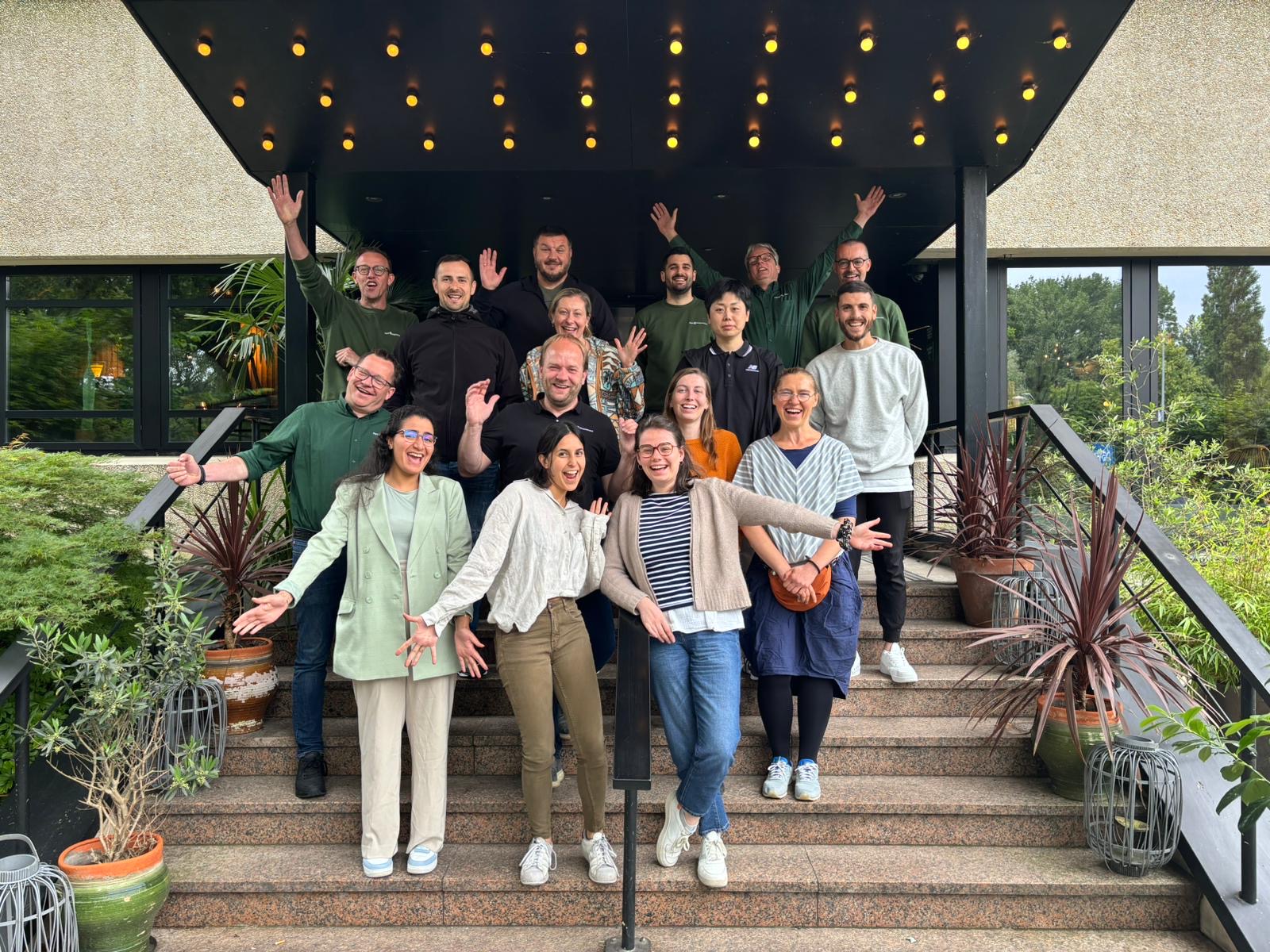
From Mexico to Amsterdam: Paula’s journey through the Summer School
Open: From Mexico to Amsterdam: Paula’s journey through the Summer School
Qualitree: using Plant Empowerment for lavender paid off
Open: Qualitree: using Plant Empowerment for lavender paid off
Small changes guided by Plant Empowerment make a big difference for Canada’s Twin Creeks Greenhouse
Open: Small changes guided by Plant Empowerment make a big difference for Canada’s Twin Creeks Greenhouse